Archiv des Autors: karsten

Maria in Berlin II

STATUS: SCHON BESCHRIEBEN

Und noch ein weiteres Bild von Maria auf Berlinbesuch mit der Bitte um Beschreibung. Hier mit ihrer Freundin Susanne vorm Berliner Dom.
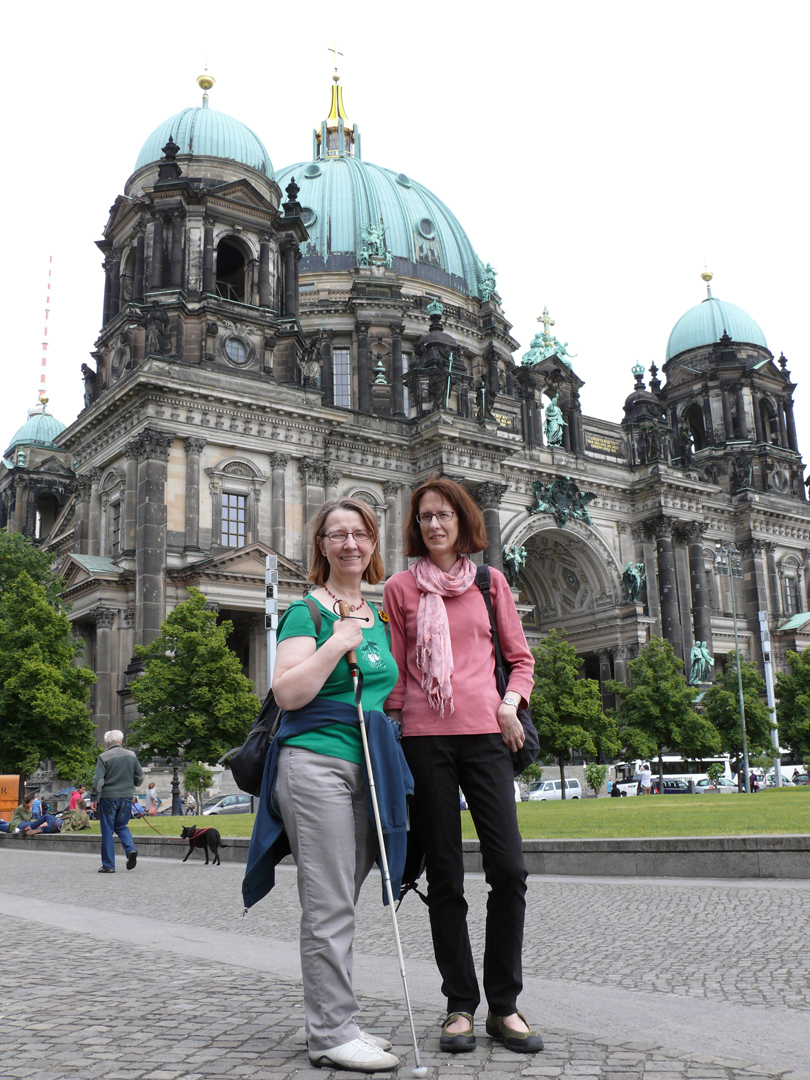
Zwei Frauen vor dem Berliner Dom

(c) Marco


Picture description by Ulrike:
The second picture is taken in the portrait format as well and you and your friend are standing close to the Cathedral of Berlin. You are not really standing in front of the building – you are standing on a sidewalk to the left of the building and about 100 yards from the building. The two of you are in the very front of the picture and again, nobody is close-by and you both stick out, which is also due to the fact that there is not much color in the picture, but I will get to that. You are both standing close to each other and slightly turned towards each other to where you and Susanne together would probably look like the letter V from above. Looking at the picture, you are standing on the right and Susanne on the left, both of you are looking at the photographer and you are wearing the same outfit as in the first picture. (I hope it is alright if I just copy and paste the description of what you are wearing). You are wearing black pants, they look like jeans, but it is really hard to tell if they are jeans. You are also wearing dark green (I believe the technical term is forest) shoes that look like Mary Janes and that have black toes. Your shirt is a dark salmon color, the scarf is a bit lighter and matches your shirt. There is a black strap on your left shoulder, and this time I can tell that it does indeed belong to a purse, as the purse is dangling beside you and you are holding it back with your left hand. The silver watch you are wearing is visible and you are still wearing your glasses with a reddish (or brownish, it is still really hard to tell) frame. Again, your left knee is slightly bent and your feet are less than the width of one foot apart from each other. It looks like most of your weight is on your right leg as the left one is not as far back as the right one. It also looks as if the heel of your left leg is not completely on the ground, but I could be wrong – you are standing on cobblestone and it is hard to tell. I realized later that I forgot to describe your hair in the first picture – your hair comes down to your chin and your bangs are combed to the side. I would describe your color as chestnut (not sure if you dye your hair, which is why I am telling you your hair color).
Your friend Susanne is about two inches shorter than you and she is standing sideways to the photographer and has turned her upper body towards the person taken the picture. Her left leg is almost completely covered by her right leg, only the upper part of her thigh and the front of her shoe is showing. Susanne is wearing white sneakers with light grey soles, medium gray pants that, judging by the seams, are jeans. She is wearing a greenish-turquoise-ish  t-shirt with a round neck. There is a drawing of a small island with a palm tree on it and some water around it – I would estimate that the entire picture is about the size of a grown woman’s hand. The leaves of the palm tree are dark green, the island is a very light brown, suggesting that the island consists of only sand and there is a total of five waves, the one closest to the island is light blue, the one next to it is a darker blue, followed by a light blue one and then the pattern repeats itself once more. Around her waist, Susanne has tied a blue sweat jacket and the sleeves are hanging down in front of her. The color of the sweat jacket is a bit lighter than navy blue. Susanne has a black backpack on her back and the strap on her right shoulder is visible. She is wearing a necklace and it looks like the necklace is made of red pearls. There is a space between the pearls, but I can’t tell what is keeping them in place. As far as the length of the necklace is concerned, I would estimate that it comes down to her collarbone, but not much further. Susanne has a button on her left shoulder, it looks like the yellow button with the three black dots, but it is hard to tell. She is holding a white can in her right hand. The cane has a light brown top and Susanne’s hand is about two inches below the very top of the cane. There is a black, rather sturdy, string coming out of the very top of the cane. The string is lying on Susanne’s hand. Underneath the brown handle, there is a black strap hanging down and right underneath it, it looks as if a red stripe has been painted on the stick. A white hemisphere is attached to the bottom of the cane. Susanne is smiling at the camera, her eyes are closed and her upper teeth are showing. She is wearing glasses with a thin dark (black?) frame, her hair is dark blond and not quite shoulder-length, I would estimate that it is about two inches longer than yours. Her hair is not exactly parted in the middle, the part is a little to the right and her bangs are all on the left side, out of her face.
As I said, the two of you are standing on cobblestone. It is a very wide cobblestone sidewalk (probably twice as wide as a regular one, but it is hard to tell because it is not entirely pictured, the curb next to the street is not in the picture (neither is the street), but the part of the sidewalk that is actually pictured suggests that the sidewalk is very wide. There is a line made of concrete running down the middle of the sidewalk. The line is about one and a half times the length of your foot and it looks as if it was poured to help people who can’t walk on cobblestone. Your left foot is right next to this line. The sidewalk leads to the left side (if you are facing the building) of the Cathedral and it looks as if it leads past the building as well, but again, it is hard to tell.
To your left, the sidewalk runs along a little wall, which come up to about half of your lower leg. The wall is made of gray flagstones and it consists of two of those flagstones – the first flagstone is about 12 inches high and 40 inches long. The second flagstone is lying on top of the first one and is about 6 inches high. It looks as if the two flagstones are the same size and as if the one on top was put there as to form a type of bench where people can sit on (or walk on). The wall runs along the sidewalk and behind the wall, there is grass. It is hard to tell where the patch of grass ends, but I have looked at some pictures on the internet and am able to tell you that the lawn is as wide as the Cathedral is long. Behind you and Susanne, about half way towards the Cathedral, a man walks his dog. He is walking away from you and he is wearing dark shoes (I can’t tell what kind), blue jeans, a dark gray jacket with light gray patches on the elbows. There is a stripe on top of the jacket that goes from shoulder to shoulder and comes down to about his shoulder blades. The stripe is the same light gray as the elbow patches. He has white hair (it looks as if there’s a bald spot on the back, but I am not sure). His left foot is on the ground, his right foot is behind him and up in the air. He is looking slightly to right and holding a red leash. His dog is black, about knee-high and it is not wearing a regular collar, but a harness and the leash is attached to it. The dog is walking slightly behind the man and to his right, very close to the wall I was talking about earlier.
On what looks like the corner of the wall, very close to the Cathedral, a group of at least two (if not three) people are sitting on the wall. The first person is wearing blue jeans and it looks as if he/she is lying down on the grass, with the feet on the wall and the knees pointing towards the sky. A second person is sitting with his/her legs crossed and with his back towards the Cathedral. It is really hard to tell if there is a third person, but as I can’t really tell you anything about this group because they are simply too small, I will have to leave it at that. Behind the person witting with his legs crossed, there is an orange box with a black R or K on it. It is about as high as the average person is tall, but I can’t tell what it is – it could be one of those clothes collection boxes, but I don’t know. There is a line of trees facing the front of the Cathedral and in the picture, two of them are to the left of you and Susanne and four to your right. A street runs right in front of the Cathedral, the street is not pictured in the photo, but there are a couple of cars standing in front of the building. One of them is a dark silver car left of you and Susanne, right underneath Susanne’s backpack, to be precise. It is the only car to the left of you. There is a white van on the right hand side, its front is at about the height of half your thigh. Behind the van, there is a white bus with dark blue writing on it. I can’t tell what’s behind the bus.
Now to the Cathedral:
The Cathedral consists of four corner towers and a big dome in the middle. On the photo, of the four towers, only the two front corner towers and the left one in the back are visible. The bottom of the building is square, but the last third (approximately) of the corner towers is round. The roofs are hemispheres and light blue from oxidation – I am guessing that the roofs are covered with copper, but I could not find any information about it on the net.
Only the front left hand corner tower is fully visible and I will describe it first. The towers are really divided into three parts, The two sides of the tower that are not attached to the Cathedral (meaning the front and the left) are built and decorated the same exact way. I will describe the front, but the same is true for the left side of the tower. The bottom of the tower to the left has a square opening on the bottom. It looks like an oversized door without the actual door. On top of this “door” there is a triangle made of stone. The triangle is attached to the building and standing on two pillars, but the pillars are not visible as a tree is covering the left one and Susanne the right one. The second part of the tower starts right above the triangle and has a rectangular window right in the middle of it. The bottom of the window is right above the triangle. The window is a lattice window and it is three panels wide and four panels high. It is really hard to estimate how big each panel is and I have unfortunately not found any information about it on the internet – I will let you know if I find out. The window has pillars to the right and left and on top of the window, there is a hemisphere that looks as if it is lying on the pillars. Halfway between the window frame and the corner of the tower, there is an additional column on each side. These columns are taller than the window and they go all the way up to the end of the square part of the tower. All the columns and the hemisphere are made of stone that has darkened (almost blackened) over the years, thanks to the air pollution, but the spaces between the columns and the window as well as between the columns and the corner of the tower are filled with salmon colored stones.
The square ending of the tower I was talking about just now really looks like a flat roof where the round tower was built on. The square “roof” is very ornate and overlaps the width of the tower below it. The very top of it is a protrusion. On top of it, there is a round tower that consists of the same blackened stone as the rest of the Cathedral. Again, it can be divided into three parts. The bottom part has a round window in the center. The window is surrounded by stone, above it there is an archway with another stone triangle above the archway. To the left and the right of the archway, there are two columns. On top of these columns, there are two sculptures that look like a four-point star, but it is rather small and hard to tell what it is. The copper roof sits on a stone circle that starts right above the triangle, on top of the roof, I can see a golden round shape on a pole. As it is pretty high up and as the golden shape is really light against a white sky, it is really hard to tell what it is.
The tower in the back on the left is not really visible – the only thing showing in the picture is the archway on top and the roof. This roof has a pole on it with white and red stripes – probably an antenna – on it.
Back to the front of the building – as I said, it consists of a tower to the left and a tower to the right. The middle of the building consists of a huge archway that leads into the Cathedral. The top of the archway is at the same height as the rectangular windows on the towers. Inside the archway, the ceiling seems to have paintings on it, but it is impossible to tell what they are. To the right of the archway, I can see to statues. They are the same greenish color as the hemisphere roofs and I am guessing that they were made out of copper as well. They look as if they are standing next to each other, looking to their left and our right. I would estimate that they are about the same size as an average human being and they are about 30 feet above the ground. They are standing in front of two black columns. These columns carry a protrusion of the same very ornate ending of the square part of the building that I described when talking about the tower. On top of this protrusion, there is a very black something – I can’t really determine what it is as it is in front of another black part of the building, but it looks as if it Is a small archway with a black hemisphere roof on it and on top of the roof, there seems to be a greenish (again, probably copper) crown on it.
Back to the big archway in the middle of the building. To the left and the right of the archway, right where the straight part ends and the hemisphere begins, there are two (one on each side) copper angles standing on a protrusion. They look like angels with their wings spread out and their hands seem to be stretched out to the front. On the very top of the archway, there is another greenish (copper?) attachment – I can’t tell what it shows and I have looked at several pictures on the internet, but I still can’t tell. It looks like a six point star that has been squished in the middle, one end pointing down the middle of the archway, one pointing up to the sky and two points each to the left and right. Above the point showing skywards is the end of the square part again. On top of it, there is a archway with a triangular top and in the archway, there is another copper statue, just as greenish as the other copper items. It looks as if two copper statues are standing on top of the triangular roof and they are holding on to a cross. The cross is standing up and is very light – it could be golden, but because of the white sky behind it, it is really hard to tell.
The big dome is behind the archway with the statues. It looks as if the dome is sitting on (and in) the middle of the building. It is as wide as the middle part of the building and I would estimate that the middle of the building is about twice as wide as the towers to the left and right. The dome consists of a stone base (also blackened), and if you look at it from the front, it has two columns on the right and the left that carry another protrusion. There is a rectangular window to the left of the left hand columns, about as tall as the columns, but very narrow. The two columns have a space between them and it looks as if there is an additional copper statue standing there, but it is too small to really tell.  Above both the protrusions I believe I can detect a copper angel with two smaller statues (children?) to the left and right of him. As these statues are standing in front of the copper hemisphere roof of the dome, it is really hard to tell what they are doing. On the side of the roof that is facing the front of the building, there are two round windows, a bigger one closer to the bottom of the roof and a smaller one above it – I would estimate that the bigger one is located at one-third of the height of the roof and the smaller one at two-thirds. Further to the left, two windows of the same kind are facing the left-hand tower. On the very top of the roof, what looks like copper columns are set up in a circle. In the middle of the circle, there is a greyish column and on top of it, there is a golden sculpture holding a golden cross. I know that art-lovers and church experts will cringe, but the shape of the sculpture holding the cross looks like an upside-down ice-cream cone with the tip cut off – and I apologize for being such a philistine, but I really do not know another way of explaining the shape.
The overall atmosphere of the picture is very quiet – the only movement in the picture is the man walking his dog and by the size of his steps I would guess that they are just strolling. Other than that, there is no movement at all – no birds in the (very light gray/white) sky, no clouds, nothing. In fact, even though there are cars in front of the Cathedral, I have caught myself not believing that there must be a street close-by where cars are running, honking and making their brakes screech.
I realize that my description of the Cathedral might cause more questions – if so, then please feel free to ask. I have tried to be as specific as possible and felt that words have failed me more than once – I was really tempted at times to build a small replica of it to send to you because I felt like my descriptions were so inadequate. After numerous corrections, I feel like I have gotten fairly close, but again, if anything is unclear, please let me know.

2 Kommentare

Eingeordnet unter schon beschrieben

Maria in Berlin I

STATUS: SCHON BESCHRIEBEN

Ihr Lieben,

wir haben zwei Bilder von Maria, einer blinden Künstlerin aus Kanada, bekommen. Sie war zu Besuch in Berlin und ihre Freundin Susanne hat einen Stadtbummel mit ihr gemacht. Es wäre super toll, wenn sich jemand finden würde, der ihr ihre Bilder auf englisch beschreibt…

Maria fragt auch, warum es so einen chicen Blog wie unseren nicht auch auf englisch gibt. Wir sind offenbar wirklich einzigartig:-)

Eine Frau vor dem Brandenburger Tor

(c) Marco

Description by Ulrike:

The first picture is taken in the portrait format and you are standing in front of the Brandenburg gate. You are in the very front of the picture and quite prominent as there is nobody close-by. The sky is light blue with some clouds, but you really have to tilt the picture to see it – the sky really looks overcast at first. The picture is almost divided into two parts by the pole of a street light that you are standing in front of. I will first explain what you are wearing and doing, then I will describe all that is to the right of the pole before finally describing the scenery to the left of the pole.

You are wearing black pants, they look like jeans, but it is really hard to tell if they are jeans. You are wearing dark green (I believe the technical term is forest) shoes that look like Mary Janes and that have black toes. Your shirt is a dark salmon color, the scarf is a bit lighter and matches your shirt. There is a black strap on your left should, I am assuming it belongs to a purse, but whatever it is attached to is hidden behind your left hand. You are wearing a silver watch and glasses with a reddish (or brownish, it is really hard to tell) frame. You are facing the camera, your left knee is slightly bent and your feet are about the width of one foot apart from each other. It looks like most of your weight is on your right leg as the left one is not as far back as the right one.

You are standing on the very wide sidewalk that consists of a path of marbled flagstones which are framed by cobblestone. You are standing on the flagstones, each flagstone is about five times as long as your foot  and about seven times as wide. On the right side of the picture (to your left since you are facing the picture) are the typical road barriers that the police uses to bar the roads during marathons, for example. They are red and white and I would estimate that they would probably come up to a little over half of your torso. To make sure that the barriers do not fall over, they are connected to a metal grate that lays on the floor and that gives them enough sturdiness to make sure that they do not need to be connected to stand up. The first road barrier is standing, the others behind it are folded up and leaning against something that is not in the picture.

Behind the gates (if you walk towards the Brandenburg Gate) on the border between the cobblestone sidewalk and the street (which is always blocked for cars) is a grey metal showcase with pictures in it. I can’t tell what the pictures are showing because they are simply too small.

Two people are standing behind the showcase and a man is walking past them. The people standing there are mostly hidden by the showcase, but one of them is wearing jeans and a red jacket or  sweater while the other one is wearing a light brown, almost beige, coat. The man walking past them (away from the Brandenburg Gate) is wearing jeans and a dark jacket.

To the left of the showcase and to your right, two men with bikes are standing on the road. The one closer to the showcase is wearing a light bike helmet and what looks like a light full-body suit. He is holding on to the saddle and the handle of his bike and looking down at the saddle. The front of his body is facing the bike and the bike is standing parallel to the curb. Behind him, a man wearing blue jeans and a white t-shirt with a red and blue picture on it is sitting on his bike, his left foot is standing on the street while his right heel is leaning on the curb, his toes are facing towards the sky. It looks like he is wearing tennis shoes. He is also wearing a backpack and has an additional black strap going from his right shoulder to his left hip. It could be a camera bag, but it is hard to tell. These two men are at about the height of your shoulder.

Behind them, on the other side of the street, there is a ship. It is hard to estimate how big it is, but it could easily be about 40 meters long. While the ship is really standing to the right of the Brandenburg Gate, the front of the ship is pointing towards the gatehouse to the left of the Brandenburg Gate. The bottom half of it is painted red, then there is a small white line and the top is dark blue. The boat bridge is located in what looks like the middle of the ship, it is white and a bit rusty and it has the European flag (dark blue with golden stars in a circle in the middle of it) on it. Underneath the flag it says PI-7283, but I really don’t know what that stands for. On the left side of the flag, there is a small window. The shape of the boat bridge looks like a big rectangular chimney with a smaller one on top. Window, flag and writing are located on the bigger “chimney”, but the smaller one starts right above the flag and the window. The name of the ship is “Europa” (it says so on the very front) and there is a white sign hanging from the ship. The upper part of the sign has a black rectangle painted on it and in it, in white, it says “SOS – save our seas” Underneath it, still in the black rectangle, it says Greenpeace. A red fish is below the left hand bottom corner of the black rectangle. At the very end of the ship, I can see iron bars, the shape of them makes me think of the top part of a deck chair – two long iron poles, one on each side of the ship, are connected by another pole on the very top and they are leaning to the right, towards the end of the ship. Two smaller poles are pushing against the long poles to make sure that they stay in place and if I am not completely mistaken, the fishing nets (not in the picture) are connected to those poles while on sea – but this is a girl from the mountains trying to explain a ship…

A woman in a light green coat and dark pants is standing in front of the ship, with her bike in front of her and she is looking at the sign, while others are just walking by without looking (they are too small to be properly described).

Behind your right side, there is the pole that I was talking about earlier and that I believe belongs to a streetlight. I can’t tell you for sure because the top is not in the picture, but the dark color and the shape (it is not a straight pole, it is decorated with occasional spheres, which are getting smaller the further up the pole they are located at) make me believe that it is a streetlight. Next to the pole and behind you, a man and a woman are looking at something. The man is facing the Brandenburg Gate (and you are therefore standing behind his back), but he is looking down. He is wearing a blue shirt and has very little hair – the top of his head is bald while there is a shadow of dark hair in the back. He is almost entirely covered by you, with the exception of the back of his head, his left arm and about half of his back. To his left, a woman is standing sideways, facing the street. She is wearing dark pants and a blue top, it could be a denim jacket, but I am not sure. She is also carrying a black backpack over her right shoulder; the other strap is hanging down. She has black, shoulder-length hair and seems to be waiting for the man to do something.

A man wearing light pants, a light green sweater and a dark jacket is walking towards you. He is looking at something to his right and he is about 20 meters behind you, right next to the man and the woman standing at the pole. Three more people (it looks like they are all men) are walking behind him, the one to the left is wearing dark pants and a dark top , the one in the middle is wearing light blue jeans, a red top and what looks like a denim jacket. He is looking at the man to his right, the one wearing dark clothes, and his left hand is on the back of his head. I believe he has light brown hair (I can’t tell the other man’s hair color). The third man looks blond to me and is wearing blue jeans and a dark blue top. It looks as if the man on the far left (the one wearing all dark clothes) could be the father of the other two, at least age-wise.

Behind them is the gatehouse that is attached to the Brandenburg Gate. The gatehouse has four pillars (only three are visible, the one to the very left is cut off by the border of the picture), a triangular roof and the walls behind the pillars are a very light salmon color. There is a wooden door between the two middle pillars and the door has four glass panels in it. A red and white sign is in attached to the bottom left hand panel, but I can’t tell what it says. Above the door, there is a windo and it looks as if the left part of it is open. A couple of people and bike riders are standing in front of the gate, but they are too far away to be properly described.

Finally, the Brandenburg Gate – you are standing in front of it and the pole of the streetlight is located between you and the Brandenburg Gate. It consists of twelve columns, six on each side and these six columns form five passageways. The Gate is a very light brown and the quadriga on top is greenish from corrosion. The quadriga consists of four horses and Victoria in a chariot, but the chariot is not visible and Victoria is hardly visible because there is a horse in front of her. Victoria is carrying a pole and it looks like on top of it, there is an eagle with its wings spread open – I have tried to google what she is carrying, but I can’t find any information about it, I will, however, look for more information and let you know. Behind the gate, I can see silver metal poles that make me believe that they are part of a stage (lights are hanging from the horizontal poles connecting the vertical ones), but I can’t really tell if it is a stage or simply part of a construction zone.

The entire atmosphere of the picture is very placid – while it is true that you can tell that people are walking, nobody seems to be running, everyone is just strolling and it looks like the perfect snapshot of a quiet afternoon in Berlin.

I hope I was able to help you – this is the first time I am describing a picture and I have tried to pay as much attention to detail as possible, however, if you have any questions, please let me know.

3 Kommentare

Eingeordnet unter schon beschrieben

Jan van Eyck – Die Arnolfini-Hochzeit

STATUS: SCHON BESCHRIEBEN

Dies ist das Bild Jan van Eycks, das Ewa zu ihrer Beschreibung von Siljas Spiegelfoto heranzieht.

Jan van Eyck: Die Arnolfini Hochzeit

Bildbeschreibung von Cord:

Das Gemälde zeigt ein stehendes Paar in einem nicht sehr großen Zimmer, links der Mann und rechts die Frau. Das Paar wirkt recht ernst, das gesamte Bild etwas streng. Ich habe den Eindruck, die beiden Menschen stehen etwas steif da. Sie tragen Kleidung, wie sie wohl bei reichen Bürgern im 15. Jahrhundert zu festlichen Anlässen üblich war, sichtbar wohlhabend, aber nicht protzig. Die beiden reichen einander die Hände, genauer, sie  strecken sie sich seitlich auf Bauchhöhe entgegen. Die Frau hat ihre geöffnete rechte Hand auf seine ebenfalls geöffnete Linke gelegt. Beide haben sehr kleine, zarte Hände. Er hält seine rechte, flache Hand vor seiner Brust hoch. Die linke Hand der Frau ruht auf ihrem sehr dicken Bauch. Sie sieht hochschwanger aus.

Der Bildausschnitt zeigt nur wenig mehr als die beiden Personen. Das Zimmer, in dem sie stehen, wirkt dadurch sehr eng.  Es ist sparsam eingerichtet und wirkt alltäglich. Links neben dem Mann befindet sich im Hintergrund ein Fenster, vor dem ein kleiner Tisch steht, auf dem einige Äpfel liegen, rechts, schräg hinter der Frau steht ein großes rotes Himmelbett.

In der Mitte sieht man durch die beiden Figuren hindurch oben einen vierarmigen Deckenleuchter aus Messing, in dem nur eine Kerze steckt, die aber brennt, obwohl es Tag ist.

Darunter steht, quasi auf die hintere, graue Zimmerwand geschrieben, „Johannes v Eyck fuit hic“ und darunter „1434“. (Wobei ich die geschwungen geschriebene Jahreszahl allein kaum hätte entziffern können. Aber in der Wikipedia steht es so. Dort auch  etwas zur Deutung des Bildes, sowie Literaturangaben.)

Und darunter wiederum der Spiegel, den Ewa in ihrem Beitrag erwähnt. Man sieht dort das stehende Paar von hinten und zwischen ihnen hindurch den Maler und aufgrund der Wölbung des Spiegels einen weiteren Bildausschnitt, also mehr vom Zimmer, als auf der ersten Bildebene. So werfen wir im Spiegel, winzig klein, einen Blick auf das gemachte Bett und sehen durch das Fenster etwas von der Landschaft draußen.

Der Spiegel steckt in einem Holzrahmen, der mit zehn kleinen runden Medaillons mit gemalten Stationen aus der Passion Christi geschmückt ist.

Links neben dem Spiegel hängt ein Rosenkranz aus Glas- oder Bernsteinperlen mit grünen Quasten an den Bandenden. Rechts daneben hängt ein Handfeger aus Reisig am Bettpfosten des mit geschnitztem Maßwerk verzierten Holzrückens des Bettes.

Unter dem Spiegel steht eine mit dem gleichen roten Stoff wie das Bett überworfene Bank, unter der zwei Pantoffeln aus rotem Leder stehen.

Auf den gräulichen, bloßen Holzdielen des Fußbodens liegt vor dem Bett ein geometrisch gemusterter Teppich. Die Dielen tragen wesentlich dazu bei, daß das Ambiente des Bildes nüchtern und wenig prunkvoll wirkt.

Daran, daß ich all diese Details auf diesem relativ kleinen Bild von 82 mal 60 cm erkennen kann, merkt man schon, daß es sehr, sehr fein gemalt ist. Man sieht noch die Kratzer auf dem Messingleuchter und die Falten in der zarten Hand der Frau.

Diese trägt ein grünes Kleid, mit großzügigem Faltenwurf und weißem Fellbesatz. Darunter sieht an den Ärmeln ein blaues Unterkleid mit Bündchen aus einem geflochtenen goldenen Band hervor. Im Ausschnitt der Frau sieht man eine goldene Halskette. Als Kopfschmuck trägt sie eine große Haube aus gestärktem weißen Stoff mit einer Spitzenborte.

Neben den auf den Boden fließenden Falten ihres Kleides steht im Bildvordergrund ein kleiner graubrauner, struwweliger Hund. Neben ihm wiederum liegt ein paar Frauen-Holzpantoffeln mit Lederriemchen.

Der Mann trägt einen dunkelvioletten, mit braunem Pelz besetzten Überwurf über seiner ansonsten dunkelblauen Kleidung. Auf dem Kopf trägt er einen fast zu groß aussehenden schwarzen Hut mit breiter Krempe, größer als ein Zylinder. Der feine Stoff der Kleidung und die Pelze tragen wesentlich dazu bei, daß das Paar sehr wohlhabend wirkt.

Bei allen wahrnehmbaren Details wirkt das Bild dennoch sehr einfach und ruhig. Die großen Farbflächen – das Violett des Umhangs des Mannes vor dem grau-braunen, eher dunkel wirkenden Hintergrund des Zimmers und das Grün des Kleides der Frau vor dem roten Bett – dominieren.

Der Teint der beiden Menschen ist auffallend hell. Das Gesicht des hageren Mannes ist schmal und zeigt keinen Haaransatz, vielleicht trägt er eine Glatze unter seinem Hut. Der Blick seiner fast wimpernlosen, halb gesenkten Lider geht schräg nach vorne, aber eigentlich geht er ins Leere, als sei er in sich versunken.

Der ebenfalls halb gesenkte Blick der Frau geht zum Mann oder wenigstens in seine Richtung. Ihr Gesicht hat ebenso wie das des Mannes ein Grübchen im Kinn, wobei ihr spitzes Kinn eher die Rundlichkeit des übrigen Gesichtes betont. Wie beim Mann kann ich ihren ruhigen Blick mit dem fest geschlossenen Mund kaum deuten.

Hinterlasse einen Kommentar

Eingeordnet unter schon beschrieben

New York – Little Italy

STATUS: SCHON BESCHRIEBEN

Liebe Bildbeschreiber,

ich war mit meiner Tochter in New York! Sie hat sehr viel fotografiert. Darf ich euch einige Bilder schicken? Es war eine tolle Reise!

Susanne

Straßenszene in Little Italy

Bildbeschreibung von Emma:

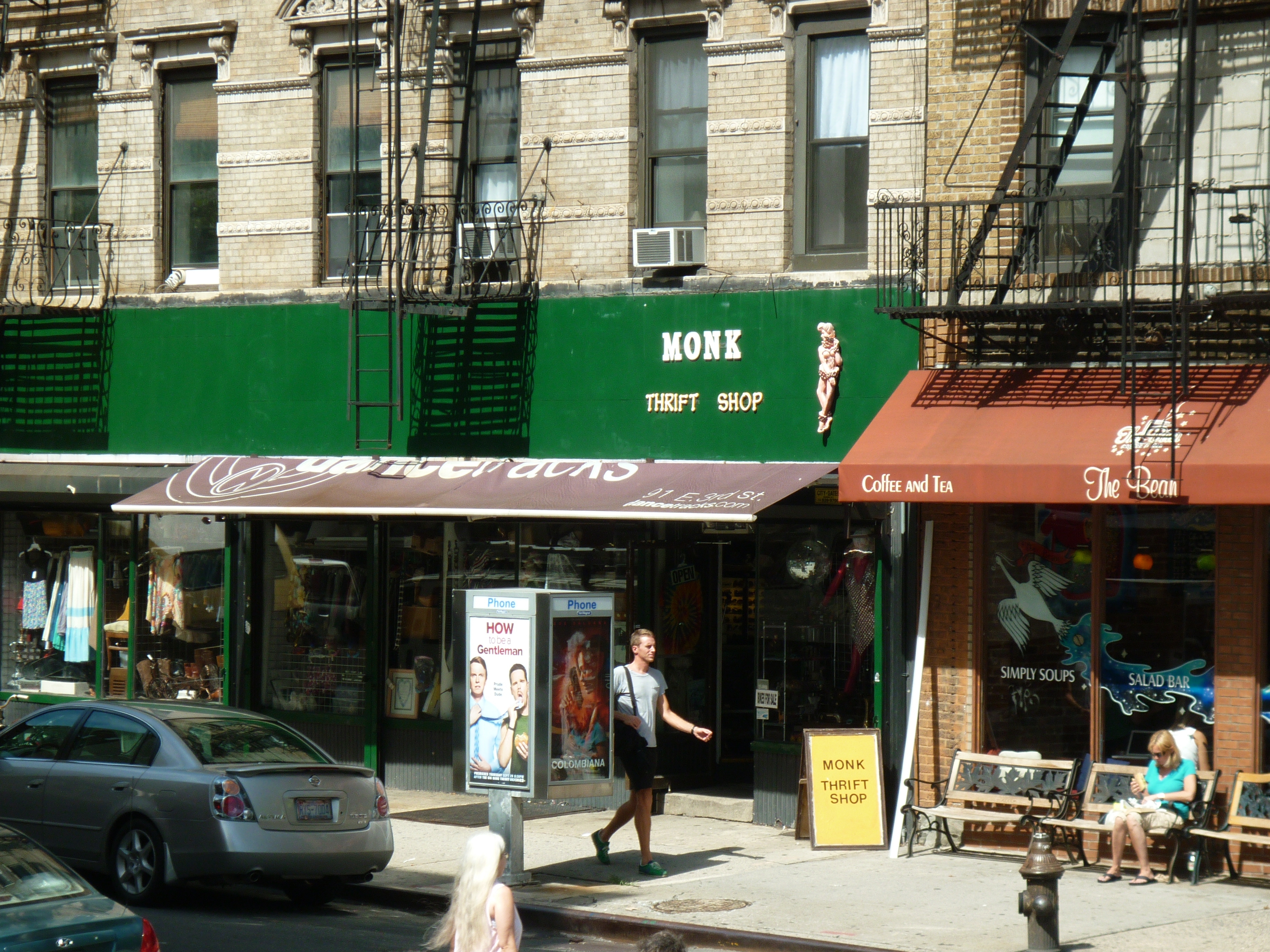
Das Bild zeigt eine städtische Straßenszene. Es gibt ziemlich viel zu sehen darauf. Ich hoffe, ich kann alles, was wichtig ist, erfassen. Vor allem: es  ist Sommer! Das Bild hat eine schöne heitere Atmosphäre.

Das Bild ist fast genau zweigeteilt.  Ich versuche, die Dinge in der Reihenfolge zu beschreiben, wie sie mir ins Auge gefallen sind. In der oberen Hälfte sieht man die Fassaden typischer, vielleicht 100 Jahre alter New Yorker Häuser aus hellem gelbem Ziegel, versehen mit ebenso typischen eisernen Feuerleitern und Balkonen mit eisernen Geländern. An einigen Fenstern sind Klimaanlagen angebracht.

In der unteren Bildhälfte sieht man zwei Geschäfte mit Markisen, die Schatten auf die Schaufenster werfen. Über dem linken Geschäft ist die Wandfläche bis zum ersten Stock mit den Wohnungen hinauf dunkelgrün gestrichen. Diese grüne Fläche beherrscht das Bild. Auf ihr ist der Name des Geschäftes in vergleichsweise kleinen weißen Buchstaben montiert: „MONK“ und darunter: „THRIFT SHOP“. Daneben befindet sich eine ebenfalls helle, für mich nicht identifizierbare Figurine.

Auf dem Bürgersteig vor dem Geschäft schreitet ein junger Mann – vielleicht ein Student – mit leichtem Schritt voran. Er hat kurze, blonde Haare und trägt ein helles T-Shirt, schwarze Shorts und Turnschuhe, sowie über der rechten Schulter eine schwarze Umhängetasche. Er passiert gerade rechts eine Telefonzelle, die zur Straße hin steht. Sie ist auf beiden sichtbaren Seiten mit Reklame beklebt. Links von ihm steht eine gelbe Klapptafel, auf der noch einmal „Monk – THRIFT SHOP“ steht. Das Schaufenster des Geschäftes liegt im Dunkel des Schattens der Markise. Dort wo die Markise nicht mehr hinreicht, erkennt man aber einige Röcke auf Kleiderbügeln.

Das nächste Haus, auf das sich der Student zubewegt, beherbergt das Café „The Bean“, wie der Schriftzug auf der Markise verrät. Vor dem Café stehen drei Bänke mit dem Rücken zur Wand. Auf der mittleren sitzt eine blonde Frau in der Sonne, sie trägt eine Sonnenbrille, ein türkisfarbenes T-Shirt, einen hellen Rock und Sandalen. Sie hat ihre Knie zusammengekniffen, um darauf einen Karton zu balancieren, aus dem sie gerade etwas Essbares nimmt, eventuell eine Teigtasche.

Vor der Frau steht an der Bordsteinkante ein altmodischer gusseiserner Hydrant. Auf den Schaufensterscheiben des Cafés in ihrem Rücken steht „SIMPLY SOUPS“ und „SALAD BAR“, darüber ist ein weißer Wasservogel gemalt, der sich eben aus einem Gewässer erhebt.

Im Vordergrund, vor dem sonnigen Bürgersteig, sieht man noch ein wenig von der Fahrbahn mit zwei Autos im Schatten und davor den Oberkörper einer langhaarigen, blonden Frau im grellen Sonnenlicht, die auf das Café zugeht. Sie trägt ein weißes, schulterfreies Top.

Hinterlasse einen Kommentar

Eingeordnet unter schon beschrieben

Noch eine Waschmaschine

Sehr Geehrtes Bildbeschreibungen-Team!

Da ich mit der letzten Bildbeschreibung sehr zufrieden war, bräuchte ich bitte noch zwei Bilder beschrieben.
Es geht wieder zum zwei Waschmaschinen.
Elin WM 716 BL
http://www.elinhaushalt.at/produkt%C3%BCbersicht/waschen-trocknen/neu-elin-wm-716-bl/
Ich hoffe dass da ein bild dabei ist.

Die zweite währe die
Elin WM 26 AAA
Ich kann da leider schwer ein bild finden. Wie schauen die beiden Maschinen genau aus vorallem interessieren mich die Bedienelemente. Wo ist was usw.

mit freundlichen Grüßen
Markus Kirschner

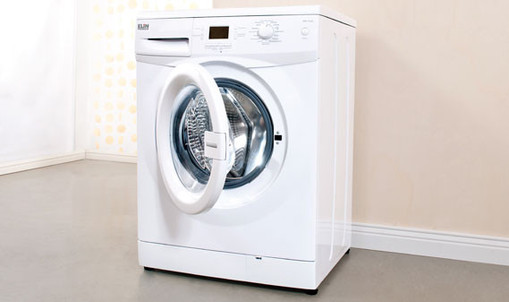
Die Waschmaschine Elin 716 BL


Bildbeschreibung Oskar Schulze

Die Waschmaschine ELIN WM 26 AAA hat die typische Form eines Quaders. In ihrer Mitte befindet sich eine durchsichtige Tür, die an ein Bullauge erinnert und von einem weißen Rand gerahmt wird. Zum Öffnen befindet sich ein Hebel an der rechten Seite des Gerätes.

Oberhalb des Bullauges finden sich die Schaltelemente. Diese sind in drei rechteckige Vektoren eingeteilt. Links oben befindet sich eine Schublade, in welche das Waschpulver gefüllt wird. Zum Öffnen dieser besitzt sie in der Mitte einen Spalt, in den man die Hand steckt, um sie daran ziehend zu öffnen. Bei geöffnetem Zustand sieht man darin zwei Kammern, wobei die Linke dem Waschpulver der Vorwäsche bzw. dem Einweichen dient und in die Rechte das Waschmittel für die Hauptwäsche kommt.

Im nächsten Sektor befindet sich das Bedienfeld der Waschmaschine. Dieses besitzt links ein Display, auf dem die Programmdauer angegeben wird. Links unter dem Display ist der Startknopf und daneben, also rechts unter dem Display, ein Knopf, der mit dem Wort „Zeit“ beschriftet ist.

Rechts von dem Display sind vier Knöpfe, die untereinander angeordnet sind. Der oberste Knopf ist zum Einschalten einer Vorwäsche gedacht, der darunter für die Kurzwäsche, der darunter für das Spülen und der Unterste für das Stoppen des Spülen.

Wiederum weiter rechts befindet sich eine vertikale LED Anzeige, die die Anzahl der Schleuderdrehungen anzeigt, indem eine der folgend aufgezählten Angaben erleuchtet: Von oben nach unten gibt es die Schleuderdrehzahlen 1600, 1350, 1150 , 900, 700 und 500. Darunter befindet sich ein Knopf mit der Bezeichnung Schleuderdrehzahl, mit dem man zwischen den einzelnen Drehzahlen auswählen kann. Rechts von der LED-Anzeige befindet sich ein“Programm- und Temperaturschalter“, der es einem ermöglicht zwischen verschiedenen Programmen und Temperaturen zu wählen. Dieser ist rund und von Programmnamen sowie den Temperaturen umringt, wobei festzustellen ist, dass die niedrigeren Temperatur immer weiter rechts stehen als die Höheren.

Die ersten 90° des Kreises stehen für Koch und Buntwäsche, bei der man zwischen 90, 75 ,60 ,40 und 30 Grad wählen kann. Die folgenden 90° des Kreises stehen für Pflegeleicht. Hier kann man die Temperatur auf 60, 50, 40 oder 30 Grad drehen. Dreht man den Knopf weiter, kommt man in den Sektor der Feinwäsche, bei dem man 40 oder 30 Grad einstellen kann. Bei einem weiteren Dreh kommt das Programm „Seide- Kalt“. Danach kommt Wolle 60, dann 30, dann Wolle Kalt. Die letzten 90 Grad des Kreises bestehen aus Handwäsche 30 °, Kaltwäsche, Spülen, Pumpen/Schleudern und aus dem letzten bzw. ersten Punkt, Stopp.

Rechts von dem Drehknopf befindet sich wieder eine LED Anzeige, die auch vertikal angeordnet ist. Sie zeigt an, welches Programm gerade läuft. Von Oben nach Unten gibt es die Anzeigen: Vorwäsche, Hauptwäsche, Spülen, Schleudern und Ende.

Darunter ist der Knopf, der zum an- und ausmachen der Waschmaschiene dient und über all diesen Bedienelementen befindet sich eine Arbeitsplatte, auf der man beispielsweise das Waschpulver lagern kann. Des Weiteren befindet sich an der unteren rechten Ecke der Waschmaschine eine Filterklappe und wiederum darunter, direkt unter der Waschmaschine, höhenverstellbare Füße.


Hinterlasse einen Kommentar

Eingeordnet unter schon beschrieben

Beschreibung für Un Mannequin

BILDBESCHREIBUNG von Aljoscha

Das ist die Geschichte einer Verwandlung in 31 Schnappschüssen. Diese Schnappschüsse – also Fotos, die quasi beiläufig und spontan vom Fotografen aufgenommen wurden, – sind so aneinander gereiht, dass man sie wie eine Erzählung oder einen Bericht zurecht fantasieren kann. Ich versuche es jetzt.

Teil I. Bilder 1 bis 15

Das erste Bild besteht aus zwei Fotos – rechts eine kunstvoll gekleidete Frau mit glänzend weißem Haar, einem weißen Reifrock, einem schwarzen Mieder und ellenbogenlangen schwarzen Handschuhen. Die Schulter und Oberarme sind frei, und sie hält davor überkreuz ihre Hände in schwarzen Handschuhen. Ihr Kopf hat sie leicht nach rechts und nach unten gesenkt. Das Foto daneben ist ein Zigarettenautomat mit einem großen Pfeil darüber und einem Schriftzug, von dem man nur die Buchstaben VIP sieht.

Mit dem zweiten Bild erschließt sich auch das erste: Es ist wohl ein Viertel in einer alten Stadt, wo Brautkleider angeboten werden. Hier hängen Dutzend ähnliche Fotos wie das erste mit jungen hübschen Frauen in lauter weißen Brautkleidern, dazu bunte Reklame, die vor der Hochzeit wohl Blumen ersetzt. Irgendwas in einer nicht sofort identifizierbaren Sprache steht auch darüber geschrieben – Tschechisch oder Ungarisch?  Szalon Heléna Exclusive Modellek. Vor Vitrinen flanieren Menschen, es ist Spätherbst und es ist fast ganz dunkel.

Plötzlich sind wir in einem Raum, grell beleuchtet, blendend weiß, mit zwei Scheinwerfern und einer Fotokamera. Hinten steht jemand in Schwarz. Aber im Vordergrund sitzt eine Frau  auf dem Stuhl. Schwarze Hose, weißer Sweatshirt. Schwarzes Haar, zusammengebunden zu einem kleinen Pferdeschwanz. Sie hält ihre linke Hand am Gesicht, sie fühlt sich unbeobachtet.

Es wird hektisch. Ein Fotograf, eine Maskenbildnerin, zwei weitere Frauen. Es ist aber nicht nur ein Foto auf diesem Bild sondern gleich mehrere, chaotisch komponiert, so wie es wahrscheinlich bei der Maske eben zugeht. Und vor dem Spiegel sitzt die Frau vom Bild davor – aber auch hier sehen wir sie von de Seite, die anderen um sie herum und das leuchtende Licht gibt die Sicht auf sie nicht frei. Erst auf dem nächsten Bild sehen wir sie genauer: sie hält die Augen geschlossen, sie wird geschminkt. Auch hier viele chaotische Schnappschüsse – der Fotograf ist auch dabei, allerdings ist er mit seiner Kamera beschäftigt und probiert was aus.

Das nächste Bild, Nummer sechs, stellt die Frau dar, die wir schon wieder erkennen. Sie sitzt noch in der Maske, aber sie ist fertig damit. Sie ist der Kamera zugewandt. Sie schaut entspannt und lächelt bezaubernd. Sie ist sehr schön.

Auf dem nächsten Bild sind zwölf kleine Schnappschüsse zusammengefügt mit drei weiteren Frauen: Sie trinken Kaffee und führen wohl ein Gespräch, auch wenn man am Anfang das Gefühl hat, dass sie vielmehr einander zuhören: sie lächeln, lachen, gestikulieren.  Besonders eine junge Schwarzafrikanerin mit einem Haarschopf.

Und gleich danach, auf dem nächsten Bild, ist sie ganz allein. In einem adretten gepunkteten Kleid mit offenen Schultern und Armen, barfuss. Doch die eigentliche Überraschung ist der Hintergrund – er ist grün. Bis jetzt war eben alles schwarzweiß. Und siehe da – ein Salatgrün, etwas verblasst. Und das Mädchen steht da, die Hände in die Seiten gestemmt.

Und wieder eine Kollage aus einigen kleinen Schnappschüssen: die Frau, die zurecht geschminkt worden ist, sitzt nun im Fotostudio – unter einem Scheinwerfer, vor dem Fotografen. Augen geschlossen, Beine weit auseinander gestellt. Man merkt ihr an, dass sie leicht angespannt ist: als hätten die Beine, die Körperhaltung, die Arme ein Kommando vom Bewusstsein bekommen. Und auch hier, auf dem letzten Schnappschuss das Mädchen vom Bild davor. Sie ist barfuss und probiert im Hintergrund wohl ihre Schritte.

Nun wissen wir auch warum: Sie ist Tänzerin. In einer heftigen Drehung wirbelt sie ihr Kleid hoch,  sie dreht sich auf den Zehspitzen, die Arme ganz nach oben geworfen. Aber die Frau mit schwarzen Hosen und weißem Shirt schaut nur halbwegs zu ihr, obwohl das tanzende Mädchen ihren Blickkontakt sucht. Die Frau sitzt burschikos da und nimmt zwar die stürmische Bewegung hinter ihr wahr, schaut aber nicht wirklich hin.

Die Tänzerin ist nun vor ihr. Sie dreht sich heftig, der Rock steht fast waagerecht ab. Aber die Frau, vor der da getanzt wird, hat sich auf ihrem Stuhl zurückgelehnt und die Augen geschlossen. Sie ist ganz entspannt.

Eine neue Drehung, ein neuer Sprung der jungen Tänzerin. Die Frau ist wieder nach vorne gebeugt und, als hätte sie was im Auge, berührt sie es leicht mit der linken Hand.

Die Pirouetten sind vorbei. Das Mädchen ist wieder ruhig. Die Frau schaut vor sich hin, etwas zu streng. Hat die junge Tänzerin etwas falsch gemacht? Oder wartet die Frau auf ihren Einsatz: die Arme und Beine deuten darauf hin, als würde sie nur auf die Musikstelle warten, bei der sie ebenfalls aufspringen und tanzen wird.

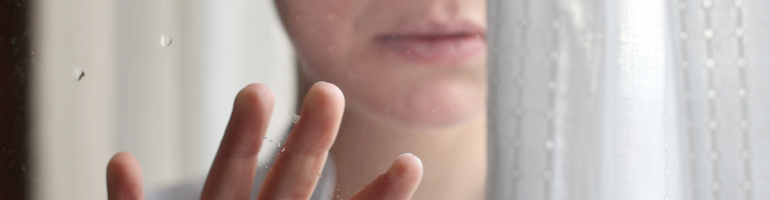
Bild 14 besteht aus zwei Fotos – eins oben und eins unten – und zeigt nur die Gesichter der beiden Frauen. Nun hält diesmal das Mädchen die Augen zu, und die Frau, die auf dem Stuhl saß, steht jetzt vor ihr, schaut aber an ihr vorbei und hält ihre Hände vor dem Gesicht des Mädchens. Auf dem Foto unten berührt sie ganz sanft mit ihren Handrückseiten die Wangen des Mädchens.

Auf dem nächsten Bild streichelt sie ihre Wangen nun mit den Fingern, mit den beiden Daumen berührt sie ihre Lippen. Das Mädchen hält die Augen offen.

Teil I. Bilder 16 bis 31

Und wieder die Schnappschüsse, die Frau ist wieder in der Maske: Die Lippen werden konturiert, die Schminke fein abgestimmt, das schwarze Haar glatt gemacht. Es gibt auch eine strahlend blonde Perücke. Ob die Frau sie bekommen wird?

Als wäre sie in den Gedanken noch bei der Tänzerin, berühren ihre Finger mit den Silberringen das Gesicht des schwarzen Mädchens: Die Daumen sind an den Augenbrauen, dort wo sie von der Nasenwurzel hoch abgehen, die anderen Finger berühren die Stirn und die Schläfen.

Noch die letzten Griffe an den Wimpern, die letzten Striche mit dem Kajalstift, und das Gesicht ist perfekt – mit strahlend weißer Perücke.

Die Frau ist verwandelt. Die Augen sind mandelartig nachgezeichnet, wie es die alten Ägypter erfanden, die Lippen geschlossen. Ein Bild der tiefen inneren Trauer und Selbstbeherrschung wäre es, wenn es nicht gleich hier, auf einem Foto noch in derselben Collage, ein Ballklein gewesen wäre. Ein schwarzes eng anliegendes Oberteil und der weiße weit abstehende Rock. Die Frau hat es auch gleich an: Der weiße Reifrock reicht bis zum Boden. Der rechte Arm im ellbogenlangen schwarzen Handschuh.

Drei Frauen helfen, damit das Kleid richtig sitzt. Das schwarze Mädchen im Hintergrund hält den weißen Stoff hoch wie eine Art Schleppe, die Hände der Frau mit den schwarzen Handschuhen im Vordergrund sind am Hals, als würde sie ihre Perlenkette zurechtrücken.

Es ist soweit, die Helfer treten langsam zurück, alle lächeln. Die schwarze Tänzerin, einer der Fotografen, die Maskenbildnerin sind noch im Vordergrund. Hinten, allein, steht sie, das neue Model. Noch ist das Licht nicht auf sie gerichtet, noch streckt jemand die Hände, um das letzte strahlend weiße Strähnchen am Haar zu glätten. Die zart schwarzen Hände der Tänzerin streicheln zur letzten Ermunterung die Wangen und das Kinn des Models. Sie schaut freundlich, dann schließt sie die Augen, an ihrem Mund ist kein einziges Fältchen, die Lippen ruhevoll.

Bild 22. Das Gesicht in Großaufnahme, schräg von oben rechts. Die Augen halb geschlossen, der Kopf halb gesenkt. In den Mundwinkeln die Geburt eines Lächelns.

Schon auf dem nächsten Bild scheint die Show vorbei zu sein. Das Model, immer noch in glänzender Perücke, weißem Seidenrock und schwarzem Mieder, steht entspannt abseits des gleißenden Lichts. Die langen Handschuhe hat sie abgestreift und hält sie in den Fingern wie ein Theaterrequisit.

Bild 24. Noch einmal das Gesicht in Großaufnahme. Frontal, mit leicht geschlossenen Lippen. Die Augen geöffnet, etwas nach rechts gerichtet. Ein Blick, in den man viel hineinlesen kann: Trauer, Zärtlichkeit, Vorahnung, Gewissheit.

Doch das Fotoshooting geht weiter, diesmal vor dem dunklen Hintergrund. Die Kostümbildnerin korriegiert die Falten am Rock. Das Model steht in der klassischen Pose: die Ellbogen am Körper, die Hände in den schwarzen Handschuhen am weißen weit abstehenden Rock entlang.

Gleißendes Weiß des Rocks und der Perücke, pechschwarzes Mieder, aprikotzarte Haut, graugrüner Hintergrund. Das Model mit geschlossenen Augen und leicht nach rechts gesenktem Kopf steht mit den Händen überkreuz vor der Brust. Die schwarzen Handschuhe an der nackten Haut. Die Story ist nicht zu Ende, aber dieses Bild ist der Grund, warum sie erzählt wird.

Oder ist die Geschichte doch schon zu Ende. Wir sind nämlich wieder dort, wo sie begann: In einem Viertel, wo Brautkleider verkauft werden. Unter Fotos von Models mit weißen Brautkleidern ist auch unsere Frau mit schwarzen Handschuhen. Das Modegeschäft „Golden Rose“ hat das schöne Bild von ihr ausgestellt.

Auf der anderen Seite des Eingangs hängt auch ein Bild von ihr, das mit den Händen in Handschuhen entlang des weißen Rocks. Darüber steht „Elite Salon“, und ein Pfeil zeigt in den Hinterhof.

Und der letzte Blick unseres Models, fast schon privat. Sie hat noch die weiße Perücke an, aber schon ihren Schal um den Hals. Es sind zwei Schnappschüsse: oben schaut sie uns noch direkt an, unten wird sie sich gleich abwenden.

Bild 30. Im Treppenhaus. Kahle Wände, zwei Lichtschalter, ein Farbschatten von einem abgenommenen Poster, eine riesige Säule auf einem schmalen Sockel. Dahinter steht unser Model. Sie ist noch in ihrem Kostüm. Aber es ist vorbei.

Und doch nicht ganz. Die Frau stellt sich noch einmal frontal vor die Kamera. Hinter ihr die Wand: unten grau, oben hell mit einem grauen Viereck, das von einem Poster zurückblieb. Der Fußboden im alten Treppenhaus mit Musterkacheln. Weißer Rock, schwarzes Mieder, schwarze Handschuhe. Das schöne Gesicht ist nach links gewandt. Der Kopf graziös gesenkt. Aber sie ist etwas zu weit weg. Und sie schaut nicht mehr zu uns.

Hinterlasse einen Kommentar

Eingeordnet unter schon beschrieben