STATUS: SCHON BESCHRIEBEN
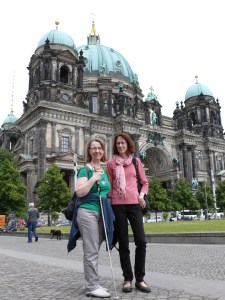
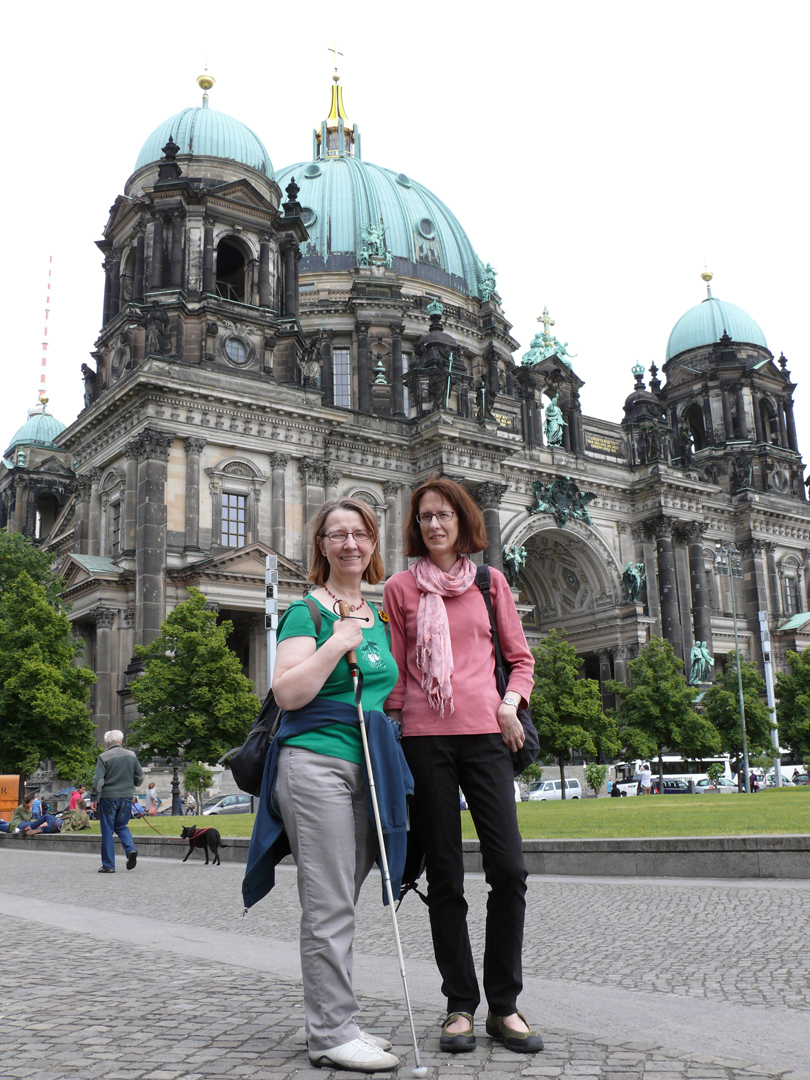
Und noch ein weiteres Bild von Maria auf Berlinbesuch mit der Bitte um Beschreibung. Hier mit ihrer Freundin Susanne vorm Berliner Dom.
(c) Marco
Picture description by Ulrike:
The second picture is taken in the portrait format as well and you and your friend are standing close to the Cathedral of Berlin. You are not really standing in front of the building – you are standing on a sidewalk to the left of the building and about 100 yards from the building. The two of you are in the very front of the picture and again, nobody is close-by and you both stick out, which is also due to the fact that there is not much color in the picture, but I will get to that. You are both standing close to each other and slightly turned towards each other to where you and Susanne together would probably look like the letter V from above. Looking at the picture, you are standing on the right and Susanne on the left, both of you are looking at the photographer and you are wearing the same outfit as in the first picture. (I hope it is alright if I just copy and paste the description of what you are wearing). You are wearing black pants, they look like jeans, but it is really hard to tell if they are jeans. You are also wearing dark green (I believe the technical term is forest) shoes that look like Mary Janes and that have black toes. Your shirt is a dark salmon color, the scarf is a bit lighter and matches your shirt. There is a black strap on your left shoulder, and this time I can tell that it does indeed belong to a purse, as the purse is dangling beside you and you are holding it back with your left hand. The silver watch you are wearing is visible and you are still wearing your glasses with a reddish (or brownish, it is still really hard to tell) frame. Again, your left knee is slightly bent and your feet are less than the width of one foot apart from each other. It looks like most of your weight is on your right leg as the left one is not as far back as the right one. It also looks as if the heel of your left leg is not completely on the ground, but I could be wrong – you are standing on cobblestone and it is hard to tell. I realized later that I forgot to describe your hair in the first picture – your hair comes down to your chin and your bangs are combed to the side. I would describe your color as chestnut (not sure if you dye your hair, which is why I am telling you your hair color).
Your friend Susanne is about two inches shorter than you and she is standing sideways to the photographer and has turned her upper body towards the person taken the picture. Her left leg is almost completely covered by her right leg, only the upper part of her thigh and the front of her shoe is showing. Susanne is wearing white sneakers with light grey soles, medium gray pants that, judging by the seams, are jeans. She is wearing a greenish-turquoise-ish t-shirt with a round neck. There is a drawing of a small island with a palm tree on it and some water around it – I would estimate that the entire picture is about the size of a grown woman’s hand. The leaves of the palm tree are dark green, the island is a very light brown, suggesting that the island consists of only sand and there is a total of five waves, the one closest to the island is light blue, the one next to it is a darker blue, followed by a light blue one and then the pattern repeats itself once more. Around her waist, Susanne has tied a blue sweat jacket and the sleeves are hanging down in front of her. The color of the sweat jacket is a bit lighter than navy blue. Susanne has a black backpack on her back and the strap on her right shoulder is visible. She is wearing a necklace and it looks like the necklace is made of red pearls. There is a space between the pearls, but I can’t tell what is keeping them in place. As far as the length of the necklace is concerned, I would estimate that it comes down to her collarbone, but not much further. Susanne has a button on her left shoulder, it looks like the yellow button with the three black dots, but it is hard to tell. She is holding a white can in her right hand. The cane has a light brown top and Susanne’s hand is about two inches below the very top of the cane. There is a black, rather sturdy, string coming out of the very top of the cane. The string is lying on Susanne’s hand. Underneath the brown handle, there is a black strap hanging down and right underneath it, it looks as if a red stripe has been painted on the stick. A white hemisphere is attached to the bottom of the cane. Susanne is smiling at the camera, her eyes are closed and her upper teeth are showing. She is wearing glasses with a thin dark (black?) frame, her hair is dark blond and not quite shoulder-length, I would estimate that it is about two inches longer than yours. Her hair is not exactly parted in the middle, the part is a little to the right and her bangs are all on the left side, out of her face.
As I said, the two of you are standing on cobblestone. It is a very wide cobblestone sidewalk (probably twice as wide as a regular one, but it is hard to tell because it is not entirely pictured, the curb next to the street is not in the picture (neither is the street), but the part of the sidewalk that is actually pictured suggests that the sidewalk is very wide. There is a line made of concrete running down the middle of the sidewalk. The line is about one and a half times the length of your foot and it looks as if it was poured to help people who can’t walk on cobblestone. Your left foot is right next to this line. The sidewalk leads to the left side (if you are facing the building) of the Cathedral and it looks as if it leads past the building as well, but again, it is hard to tell.
To your left, the sidewalk runs along a little wall, which come up to about half of your lower leg. The wall is made of gray flagstones and it consists of two of those flagstones – the first flagstone is about 12 inches high and 40 inches long. The second flagstone is lying on top of the first one and is about 6 inches high. It looks as if the two flagstones are the same size and as if the one on top was put there as to form a type of bench where people can sit on (or walk on). The wall runs along the sidewalk and behind the wall, there is grass. It is hard to tell where the patch of grass ends, but I have looked at some pictures on the internet and am able to tell you that the lawn is as wide as the Cathedral is long. Behind you and Susanne, about half way towards the Cathedral, a man walks his dog. He is walking away from you and he is wearing dark shoes (I can’t tell what kind), blue jeans, a dark gray jacket with light gray patches on the elbows. There is a stripe on top of the jacket that goes from shoulder to shoulder and comes down to about his shoulder blades. The stripe is the same light gray as the elbow patches. He has white hair (it looks as if there’s a bald spot on the back, but I am not sure). His left foot is on the ground, his right foot is behind him and up in the air. He is looking slightly to right and holding a red leash. His dog is black, about knee-high and it is not wearing a regular collar, but a harness and the leash is attached to it. The dog is walking slightly behind the man and to his right, very close to the wall I was talking about earlier.
On what looks like the corner of the wall, very close to the Cathedral, a group of at least two (if not three) people are sitting on the wall. The first person is wearing blue jeans and it looks as if he/she is lying down on the grass, with the feet on the wall and the knees pointing towards the sky. A second person is sitting with his/her legs crossed and with his back towards the Cathedral. It is really hard to tell if there is a third person, but as I can’t really tell you anything about this group because they are simply too small, I will have to leave it at that. Behind the person witting with his legs crossed, there is an orange box with a black R or K on it. It is about as high as the average person is tall, but I can’t tell what it is – it could be one of those clothes collection boxes, but I don’t know. There is a line of trees facing the front of the Cathedral and in the picture, two of them are to the left of you and Susanne and four to your right. A street runs right in front of the Cathedral, the street is not pictured in the photo, but there are a couple of cars standing in front of the building. One of them is a dark silver car left of you and Susanne, right underneath Susanne’s backpack, to be precise. It is the only car to the left of you. There is a white van on the right hand side, its front is at about the height of half your thigh. Behind the van, there is a white bus with dark blue writing on it. I can’t tell what’s behind the bus.
Now to the Cathedral:
The Cathedral consists of four corner towers and a big dome in the middle. On the photo, of the four towers, only the two front corner towers and the left one in the back are visible. The bottom of the building is square, but the last third (approximately) of the corner towers is round. The roofs are hemispheres and light blue from oxidation – I am guessing that the roofs are covered with copper, but I could not find any information about it on the net.
Only the front left hand corner tower is fully visible and I will describe it first. The towers are really divided into three parts, The two sides of the tower that are not attached to the Cathedral (meaning the front and the left) are built and decorated the same exact way. I will describe the front, but the same is true for the left side of the tower. The bottom of the tower to the left has a square opening on the bottom. It looks like an oversized door without the actual door. On top of this “door” there is a triangle made of stone. The triangle is attached to the building and standing on two pillars, but the pillars are not visible as a tree is covering the left one and Susanne the right one. The second part of the tower starts right above the triangle and has a rectangular window right in the middle of it. The bottom of the window is right above the triangle. The window is a lattice window and it is three panels wide and four panels high. It is really hard to estimate how big each panel is and I have unfortunately not found any information about it on the internet – I will let you know if I find out. The window has pillars to the right and left and on top of the window, there is a hemisphere that looks as if it is lying on the pillars. Halfway between the window frame and the corner of the tower, there is an additional column on each side. These columns are taller than the window and they go all the way up to the end of the square part of the tower. All the columns and the hemisphere are made of stone that has darkened (almost blackened) over the years, thanks to the air pollution, but the spaces between the columns and the window as well as between the columns and the corner of the tower are filled with salmon colored stones.
The square ending of the tower I was talking about just now really looks like a flat roof where the round tower was built on. The square “roof” is very ornate and overlaps the width of the tower below it. The very top of it is a protrusion. On top of it, there is a round tower that consists of the same blackened stone as the rest of the Cathedral. Again, it can be divided into three parts. The bottom part has a round window in the center. The window is surrounded by stone, above it there is an archway with another stone triangle above the archway. To the left and the right of the archway, there are two columns. On top of these columns, there are two sculptures that look like a four-point star, but it is rather small and hard to tell what it is. The copper roof sits on a stone circle that starts right above the triangle, on top of the roof, I can see a golden round shape on a pole. As it is pretty high up and as the golden shape is really light against a white sky, it is really hard to tell what it is.
The tower in the back on the left is not really visible – the only thing showing in the picture is the archway on top and the roof. This roof has a pole on it with white and red stripes – probably an antenna – on it.
Back to the front of the building – as I said, it consists of a tower to the left and a tower to the right. The middle of the building consists of a huge archway that leads into the Cathedral. The top of the archway is at the same height as the rectangular windows on the towers. Inside the archway, the ceiling seems to have paintings on it, but it is impossible to tell what they are. To the right of the archway, I can see to statues. They are the same greenish color as the hemisphere roofs and I am guessing that they were made out of copper as well. They look as if they are standing next to each other, looking to their left and our right. I would estimate that they are about the same size as an average human being and they are about 30 feet above the ground. They are standing in front of two black columns. These columns carry a protrusion of the same very ornate ending of the square part of the building that I described when talking about the tower. On top of this protrusion, there is a very black something – I can’t really determine what it is as it is in front of another black part of the building, but it looks as if it Is a small archway with a black hemisphere roof on it and on top of the roof, there seems to be a greenish (again, probably copper) crown on it.
Back to the big archway in the middle of the building. To the left and the right of the archway, right where the straight part ends and the hemisphere begins, there are two (one on each side) copper angles standing on a protrusion. They look like angels with their wings spread out and their hands seem to be stretched out to the front. On the very top of the archway, there is another greenish (copper?) attachment – I can’t tell what it shows and I have looked at several pictures on the internet, but I still can’t tell. It looks like a six point star that has been squished in the middle, one end pointing down the middle of the archway, one pointing up to the sky and two points each to the left and right. Above the point showing skywards is the end of the square part again. On top of it, there is a archway with a triangular top and in the archway, there is another copper statue, just as greenish as the other copper items. It looks as if two copper statues are standing on top of the triangular roof and they are holding on to a cross. The cross is standing up and is very light – it could be golden, but because of the white sky behind it, it is really hard to tell.
The big dome is behind the archway with the statues. It looks as if the dome is sitting on (and in) the middle of the building. It is as wide as the middle part of the building and I would estimate that the middle of the building is about twice as wide as the towers to the left and right. The dome consists of a stone base (also blackened), and if you look at it from the front, it has two columns on the right and the left that carry another protrusion. There is a rectangular window to the left of the left hand columns, about as tall as the columns, but very narrow. The two columns have a space between them and it looks as if there is an additional copper statue standing there, but it is too small to really tell. Above both the protrusions I believe I can detect a copper angel with two smaller statues (children?) to the left and right of him. As these statues are standing in front of the copper hemisphere roof of the dome, it is really hard to tell what they are doing. On the side of the roof that is facing the front of the building, there are two round windows, a bigger one closer to the bottom of the roof and a smaller one above it – I would estimate that the bigger one is located at one-third of the height of the roof and the smaller one at two-thirds. Further to the left, two windows of the same kind are facing the left-hand tower. On the very top of the roof, what looks like copper columns are set up in a circle. In the middle of the circle, there is a greyish column and on top of it, there is a golden sculpture holding a golden cross. I know that art-lovers and church experts will cringe, but the shape of the sculpture holding the cross looks like an upside-down ice-cream cone with the tip cut off – and I apologize for being such a philistine, but I really do not know another way of explaining the shape.
The overall atmosphere of the picture is very quiet – the only movement in the picture is the man walking his dog and by the size of his steps I would guess that they are just strolling. Other than that, there is no movement at all – no birds in the (very light gray/white) sky, no clouds, nothing. In fact, even though there are cars in front of the Cathedral, I have caught myself not believing that there must be a street close-by where cars are running, honking and making their brakes screech.
I realize that my description of the Cathedral might cause more questions – if so, then please feel free to ask. I have tried to be as specific as possible and felt that words have failed me more than once – I was really tempted at times to build a small replica of it to send to you because I felt like my descriptions were so inadequate. After numerous corrections, I feel like I have gotten fairly close, but again, if anything is unclear, please let me know.
Gefällt mir Wird geladen …
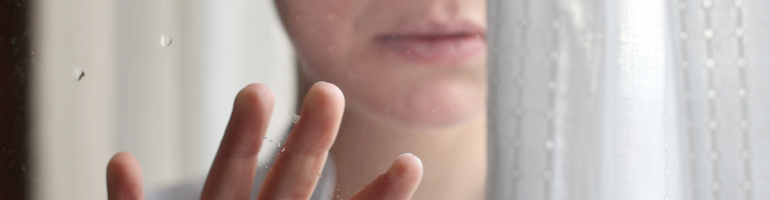
 Bildbeschreibung von Fränz
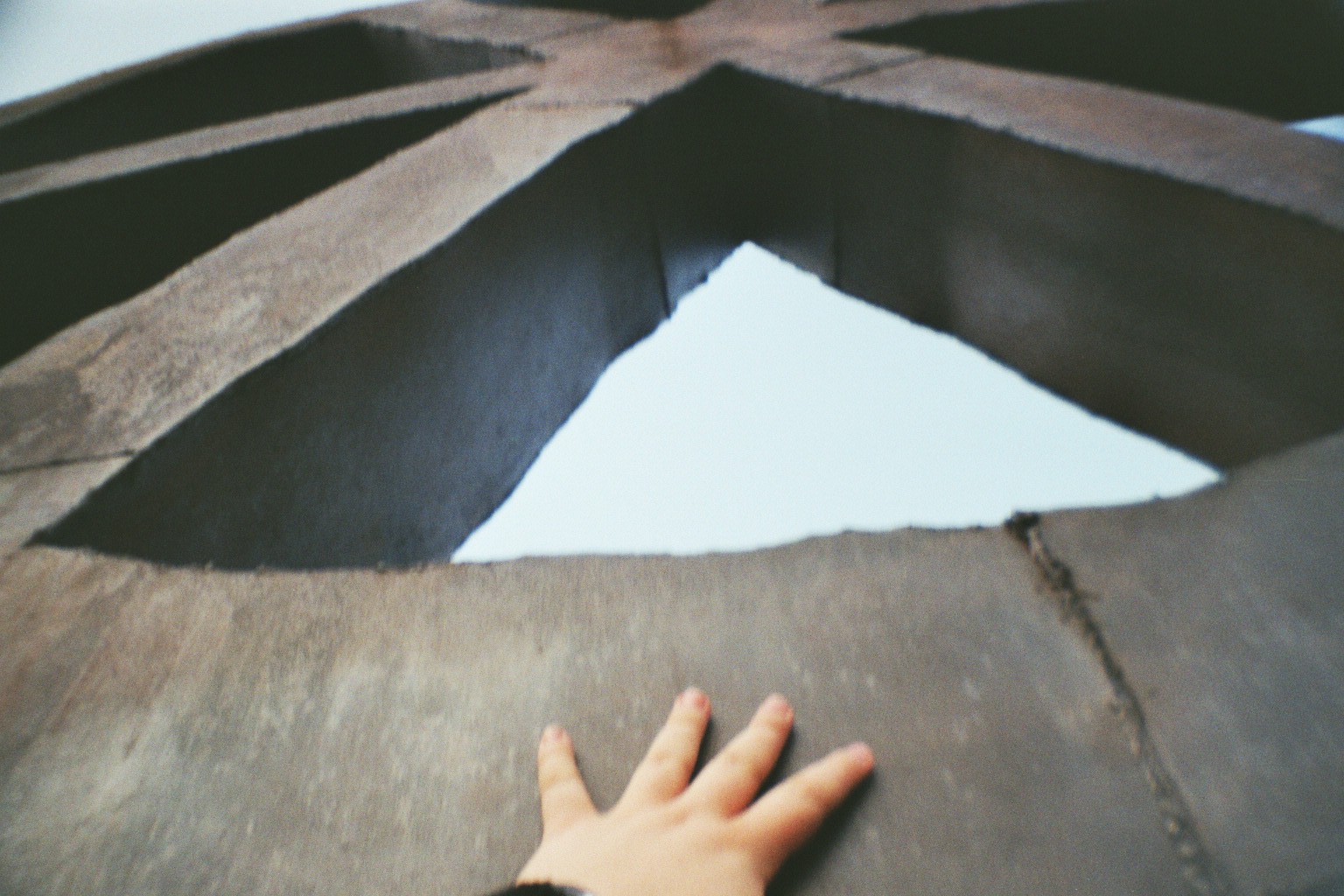

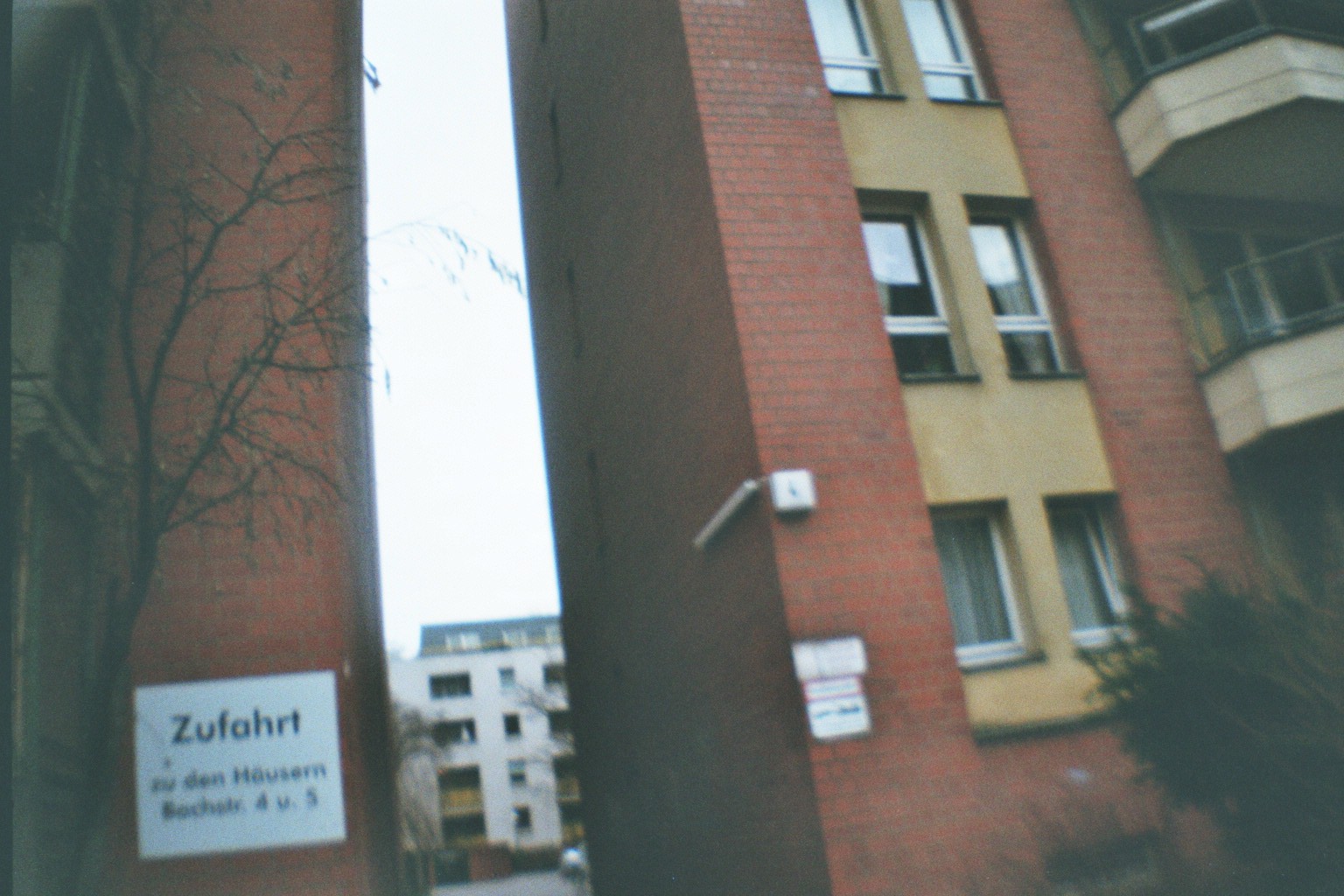









 Bilder für die Blinden